

Every great design begins with an idea. Sometimes it’s a sketch on paper, a prototype on the workbench, or an existing object that inspires creativity. Turning that idea into a polished, production-ready product requires precision, accuracy, and the right tools.
A 3D laser scanner is one such tool. It captures the exact dimensions, shapes, and surfaces of real-world objects and converts them into digital 3D models. This allows designers, engineers, and makers to refine, modify, and reproduce objects with confidence.
What Is a 3D Laser Scanner?
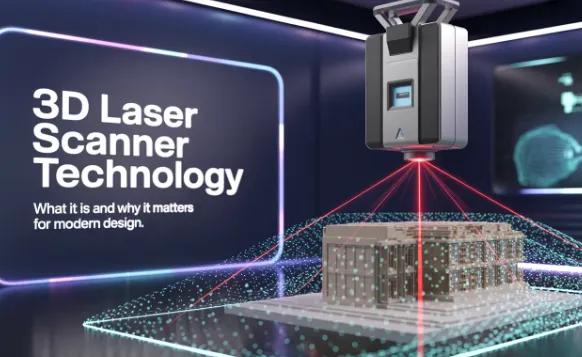
At its core, a 3D laser scanner is a device that uses light to capture the shape and surface of an object. The scanner emits laser beams that bounce off the object, collecting thousands of data points that map its exact geometry.
Unlike manual measurement or guess-based modeling, a 3D laser scanner creates precise digital representations. Curves remain smooth, edges stay sharp, and dimensions are accurate. This level of detail is critical for design, prototyping, and production.
How Laser Scanning Technology Works
Laser scanning technology is based on capturing light reflections. When a laser hits a surface, it measures how long the light takes to return. This data is compiled to form a dense cloud of points, called a point cloud, which represents the object in three dimensions.
Modern scanners, like those from Revopoint, combine high-speed scanning with advanced tracking algorithms. This allows for real-time feedback and reduces the need for rescans. The result is an efficient, accurate, and user-friendly process that anyone from a maker to a professional designer can use.
Why 3D Laser Scanners Matter in Modern Design
Design today moves fast. Products go from concept to prototype to production in weeks, not months. In this environment, small errors can cause major delays or cost overruns.
A 3D laser scanner ensures accuracy from the start. By capturing objects digitally, designers can:
Reduce dimensional errors
Avoid misaligned components
Minimize wasted materials
Speed up iteration and prototyping
With laser scanning technology, digital models reflect reality, allowing designers to test, refine, and finalize designs without guesswork.
Applications Across Industries
The versatility of laser scanning technology makes it useful in a wide range of fields:
Product Design: Scan prototypes and existing parts for accurate modeling.
Automotive and Aerospace: Inspect components, reverse-engineer parts, and ensure fit and precision.
Architecture and Construction: Capture building details, preserve heritage structures, and plan renovations.
Art and Sculpture: Digitize physical artworks for preservation or reproduction.
Education and Research: Teach design principles and experiment with real-world objects.
Revopoint makes this technology accessible to both professionals and independent creators, combining high precision with portability and ease of use.
Advantages of Using 3D Laser Scanners
The benefits of using a 3D laser scanner extend beyond accuracy:
Speed: Scanning is faster than manual measurement or modeling.
Precision: High-density point clouds capture intricate details.
Flexibility: Scans can be edited, scaled, and exported to common 3D formats like STL or OBJ.
Portability: Modern scanners are lightweight and handheld, allowing scanning anywhere.
This combination of speed, accuracy, and convenience makes laser scanning technology a vital part of modern design workflows.
From Scan to Production
A scan is only valuable if it can be used effectively. Scanned data can be cleaned, refined, and integrated into CAD software or 3D printing workflows. Designers can smooth surfaces, adjust tolerances, or combine scanned data with other digital models.
Revopoint scanners are designed for seamless integration with production-ready tools. This ensures that scanned data is immediately useful for prototyping, printing, or digital modeling, turning raw data into actionable designs quickly.
Why Revopoint Stands Out
Revopoint is a trusted provider of 3D laser scanner solutions. Their devices are designed for real-world use, combining professional-grade precision with portability and user-friendly software.
Features of Revopoint scanners include:
High-accuracy scanning for detailed captures
Fast data processing for efficiency
Real-time tracking for reduced errors
Compatibility with popular 3D design and printing software
Portable designs suitable for studio, workshop, or field use
This makes laser scanning technology accessible to both beginners and experienced makers alike, providing the tools needed to turn ideas into reality.
Final Thoughts
Modern design is no longer just about imagination—it’s about execution. A 3D laser scanner ensures that your digital models reflect reality with accuracy and detail.
With laser scanning technology, designers can capture objects, refine prototypes, and produce high-quality 3D prints faster than ever. From initial concept to final product, scanning reduces errors, saves time, and expands creative possibilities.
For makers, engineers, and designers, incorporating a 3D laser scanner into the workflow is no longer optional. It’s a critical tool that turns concepts into creations with precision, confidence, and efficiency.